
Time for Bed
By Angela Dunsby
I am sure we are all familiar with the term “Bed and Board”, a phrase coming from medieval times and in reference to the less than comfy bed of today. A “board” would be set upon trestles or tree stumps with a mattress of straw, unless of course you were very wealthy and could afford the luxury of pillows, fur rugs and quilts. If you were lucky enough to have servants, they would have been given the unfortunate option of sleeping on the floor around the fire.
Around the 13th century, the canopy was introduced. According to many historians, the canopy was first made in Austria. Suspended from the ceiling, its purpose was to protect the sleeper from falling debris, remember of course that medieval and Tudor houses would not have had the smooth ceilings that we have today. You certainly wouldn’t want to be woken up by a bug falling on your face!
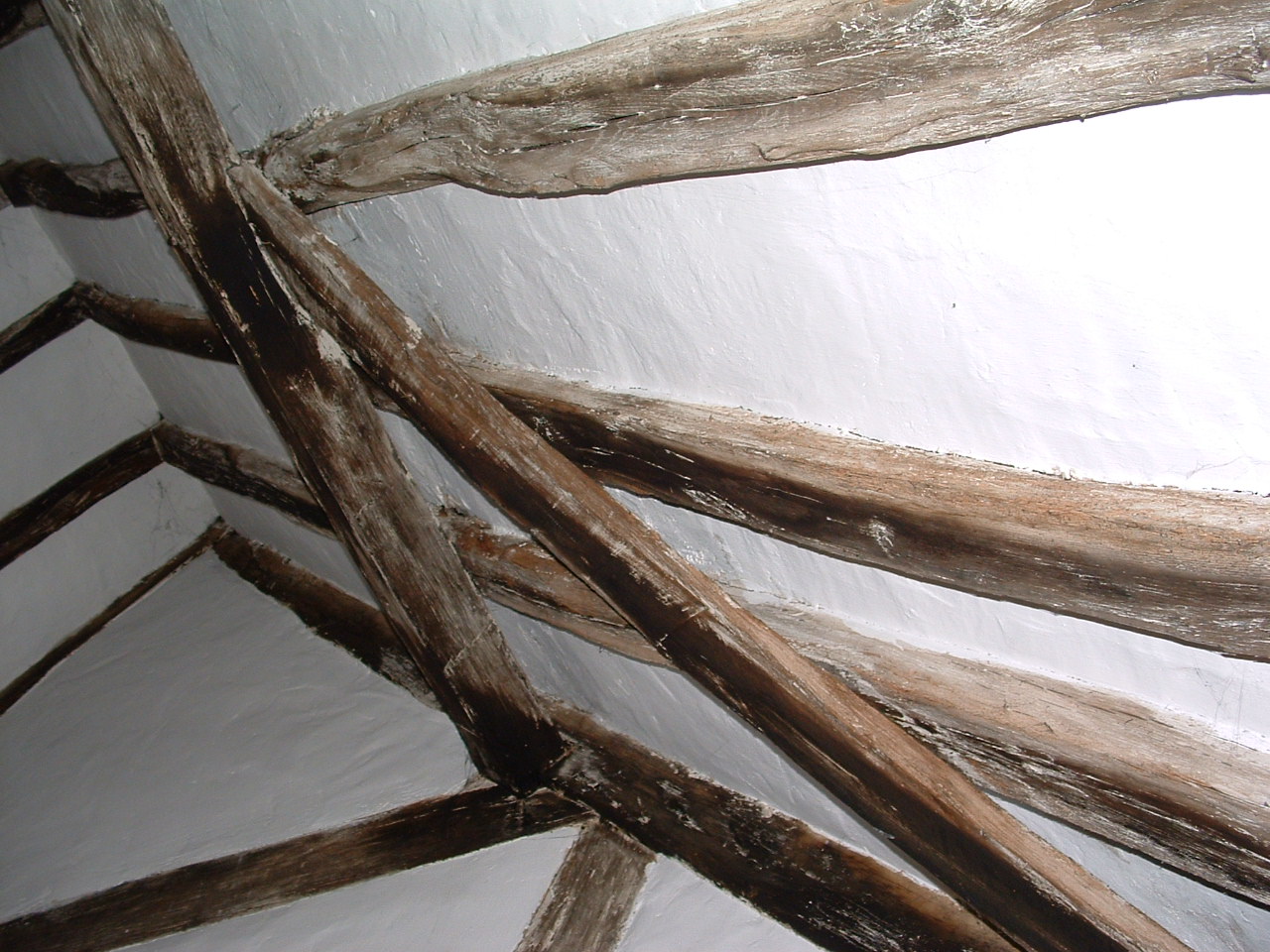
Rafters in Merchant’s House
As the 15th century approached, side canopies were added to the bed and the first examples of a four- poster bed were seen. These beds became extremely popular amongst the nobility, and even today are considered quite a luxury. As you were now completely enclosed in the bed, the term “bed chamber” started to appear. Amongst the wealthy, these beds were used as great statement pieces, often with grandiose designs including family coats of arms, knights and floral patterns. As the saying goes, “If you’ve got it, flaunt it”! The larger and heavier your bed, the higher up the social ladder you were, especially when adorned with silk and other luxury fabrics.
Tudor beds were constructed using English oak or walnut and were so valuable that they were often bequeathed in the will as a prized possession to be passed on.
During the 14th century the feather bed was introduced and would have been placed on a matted truss of straw, but again, only if you had the means to afford it.

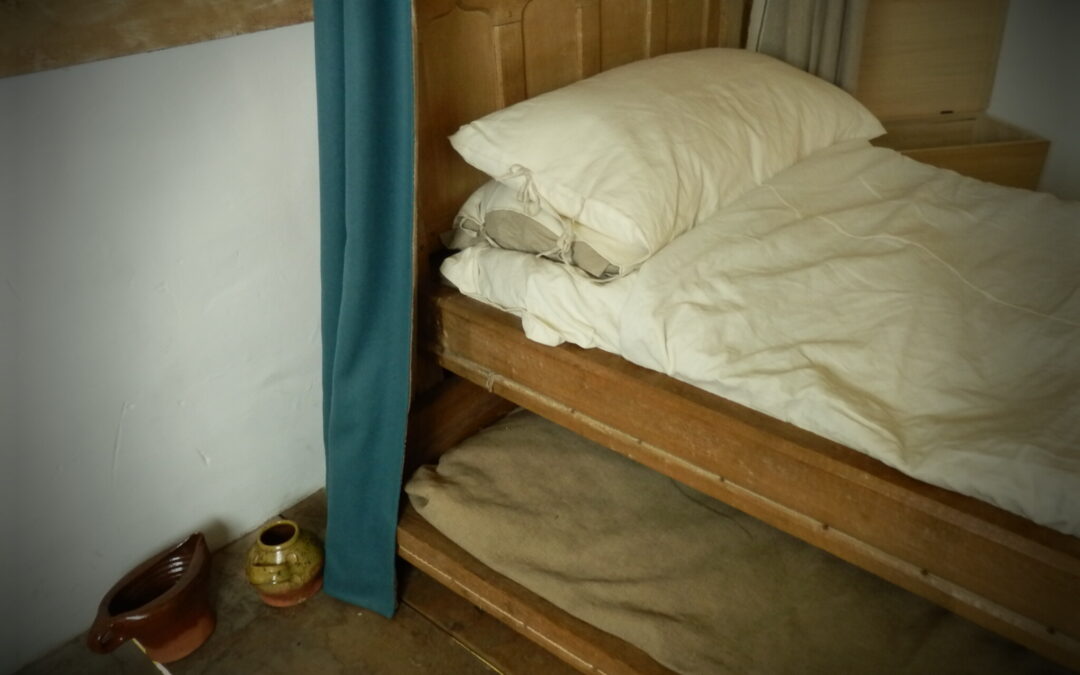
Four post bed with trundle bed underneath in the Merchant’s House
At the John Moore Museum, there is an excellent example of a four-poster bed from the Tudor period, which is on view for visitors to see in the Merchant’s House. Although not thought to be the home of a very wealthy merchant, he would have certainly had the means to provide certain luxuries. The bed has a woven rush base and would have been topped with a straw or flock (rough wool) mattress, with linen sheets and even pillows. The canopy and surrounding curtains would have provided some relief from draughts, bugs and rats and as the Tudors believed in the miasma theory, they may have hoped it provided some protection from air borne diseases. As the whole family would have shared this one bedroom, it also allowed a small amount of privacy from the children sleeping on the truckle bed beside them, although it often surprises me that people had so many children when the process involved such lack of privacy!
All in all, I think that bedtime would have been a lot less welcome time of day than it is today, and I am grateful that beds have evolved into the dreamy constructions of today.
Recent Comments