
Return of the May Fish: River Severn’s Environment
By: Euan Richmond
INTRODUCTION:
Tewkesbury’s environment supports a diverse wildlife community ranging from small invertebrates (e.g., red admiral butterflies) to large birds (e.g., mute swans and Grey Herons). Some of the most affected are the fish within our rivers.
Since the Industrial Revolution, populations of twaite shad (Alosa fallax), commonly known as the “May Fish”, have reduced. Once hundreds of thousands crossed the River Severn. Now their numbers are a fraction of that. European eel (Anguilla anguilla) have plummeted also.
Eels were once so plentiful they were used as currency. John Moore perfectly described their historical abundance in Man and Bird and Beast:
“they sometimes take a hundred-weight in an evening, that’s roughly 170,000 elvers – so a score of fishermen may kill three million in one night’s fishing … undiminished supply, all the way from the Sargasso Sea…”
John Moore’s quote highlights how the River Severn and Avon ecosystems have shifted over the years. However, recent efforts, such as the ‘Unlocking the Severn’ project, have sought to regain Tewkesbury’s lost aquatic ecosystem.
TWAITE SHAD AND THEIR DECLINE:

Image of Twaite Shad
Credit: (Couch, 1877)
Twaite shad are members of the herring family which are silver in colour with 3-10 dark spots. They can be differentiated from its relative Allis shad (Alosa alosa) by the number of gill rakers (comb-like structures used in food straining). Twaite only have 40-60 compared to 90-130 in Allis.

Image of Eurasian Otter
Credit: (Leclert, 2022)
Shad are found around the British Isles and Europe where they migrate inland to spawn. Spawning occurs between late-Spring and early-Summer explaining their colloquial name “May Fish”. During their migration, alongside eels, they cross the Severn estuary, eventually entering both the River Severn and Wye helping to sustain larger species (e.g., Eurasian Otters, Lutra lutra). Released eggs hatch in 4 days and the resulting juveniles, 1-2mm in length, drift towards the estuary where they’ll stay for a year. After this time they swim to sea only returning to spawn when sexually mature.
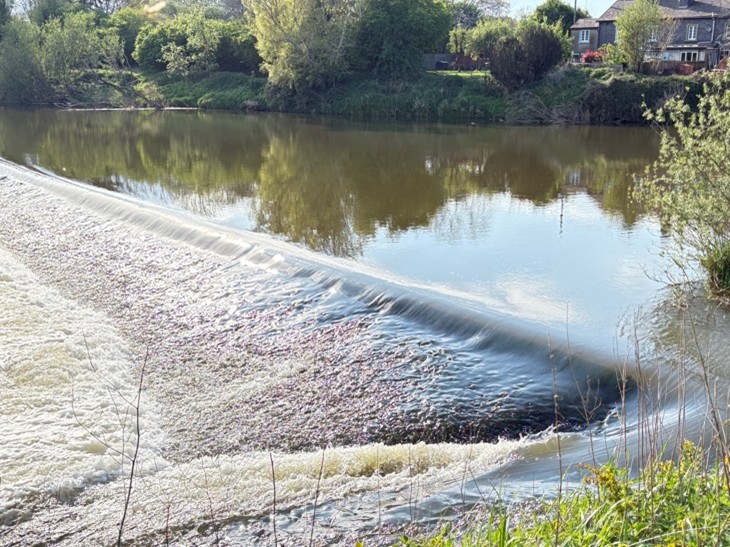
Image of Upper Load Weir
In the 19th century, weirs were made to enable human navigation further upstream (examples above). However, weirs prevent passage upstream, thus impeding twaite migrations. This exhausts fish, reducing their chance of survival. For similar reasons, European eels have declined yearly by 15% since 1980.
UNLOCKING THE SEVERN:
Between 2016 and 2023, a program known as ‘Unlocking the Severn’ was established to restore the upstream access for migratory species. Passages composed of ascending pools, also known as “fish passes”, were constructed. This broke larger barriers, like the Diglis Weir, into manageable steps for species like shad. These passes were only implemented in Worcestershire which has large weirs. Therefore, Tewkesbury’s small weirs did not receive any new passes.

Image of Diglis Weir Fish Ladder
Credit: (Allen, 2023)
Shad numbers were estimated through local volunteers counting individuals passing through notches. Some fish were acoustically tagged notifying receivers along the river tracking their paths. Fish pass efficiency was assessed via Passive Integrated Transponder (PIT) tagging. These provide a location when a fish swims through special antennas along the passes. eDNA, which is DNA released into the environment by fish, help us to judge how far the shad migrate.
Furthermore, a “Fish Window” was established at Diglis Weir to support fish swimming through the Passes. Within Tewkesbury, numbers were estimated by volunteers counting shad passing the notch on the Upper Load Weir. The scheme was highly successful, with 725 shad successfully migrating using the passes in 2022. Additionally, 940 sea lampreys, another endangered migratory species, used the new fish passes. These were major steps in restoring the Severn’s biodiversity; boosting the abundance of multiple migratory fish.
REMAINING HURDLES:
While ‘Unlocking the Severn’ was successful in improving fish migration, there are still some caveats. Its focus on larger weirs, rather than smaller obstacles, over looked those in Tewkesbury and other areas. Minor barriers are more frequent and depend on a fish’s swimming ability, often relying on the high tide. The Upper Load Weir (see image above) does have a riverbank notch to help shad cross, however, this may not be enough during low tide and for other species. Tewkesbury’s second weir, the Abbey Mill Weir, has an eel pass, which aids the European eel migration but isn’t specifically designed to help larger fish species.
Additionally, fish passes do not prevent injuries when bypassing a weir, with fish often colliding with solid objects and debris. This along with consecutive wounds, stress and exhaustion may result in fish death. Careful monitoring of different fish species, age, and size can help identify hazardous aspects of passages.
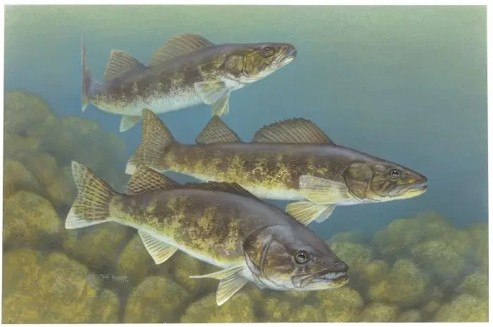
Image of Pikeperch
Credit: (Knepp, 2008)
Furthermore, passages allow both non-native and native species to migrate past weirs. For instance, the invasive pikeperch (Sander lucioperca) competes for food with other fish. This could potentially further devastate the Severn’s ecosystem.
However, selective passages, composed of a fixed bar grate, were implemented in the Laurentian Great Lakes to reduce access to the common carp (Cyprinus carpio). Therefore, similar selective passages could be beneficial in the River Severn.
ADDITIONAL ISSUES FACING SHAD AND OTHER SPECIES:
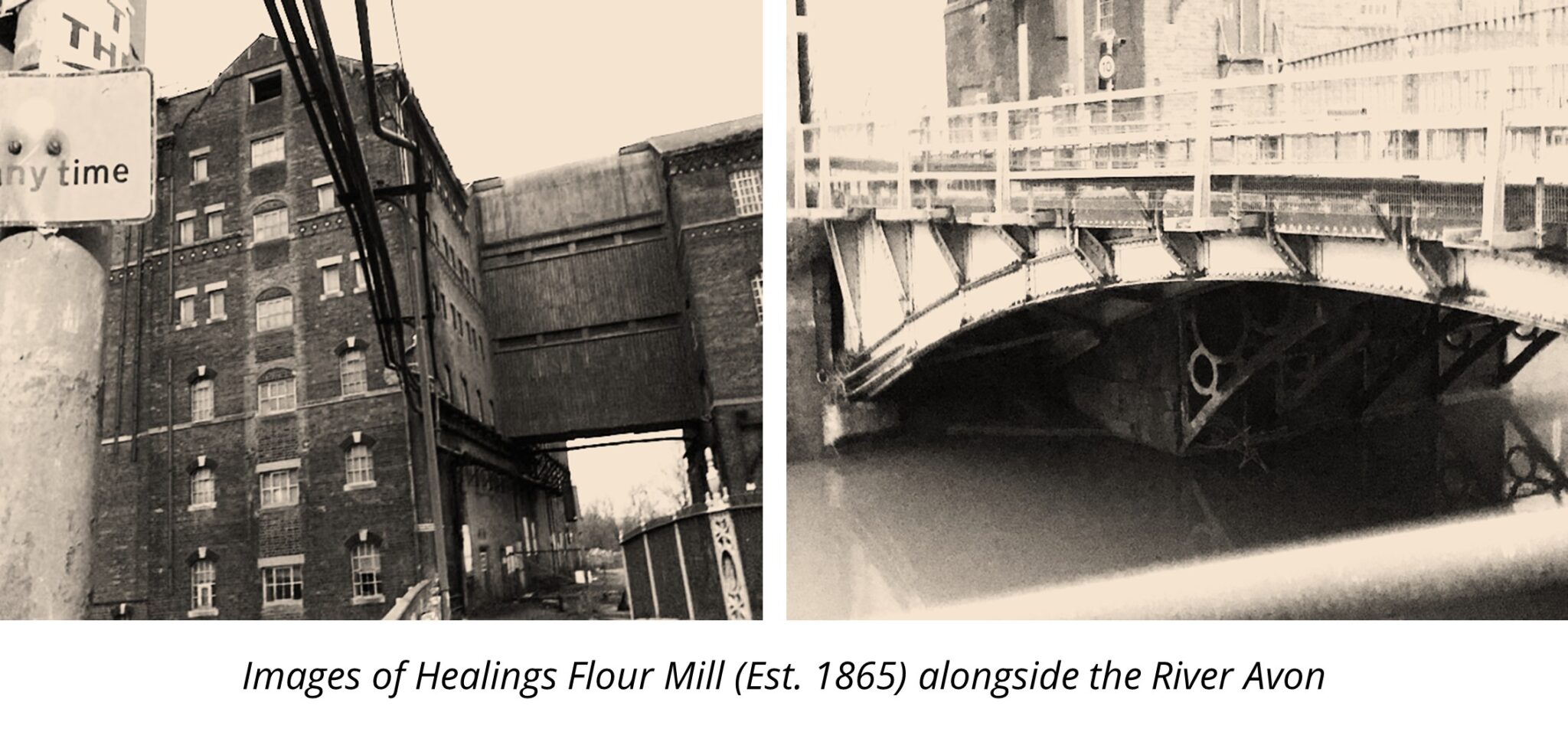
Alongside weirs, twaite shad and other species are affected by pollution entering the river from a variety of sources. For instance, in 2011 metal thieves caused an oil spill in the River Avon from Healings Mill. Oil affects fish cardiac function, nervous system function, and stress response which could be detrimental to survival.
Other than isolated events like the mill break-in, the River Severn is still polluted with sewage. In 2023, there were 53,072 discharges of raw sewage into the river. Natural removal of sewage requires high levels of oxygen. This overall decreases its concentration within rivers. Additionally, sewage contains phosphate and nitrate which leads to excessive plant growth reducing oxygen levels further. Sewage pollution can be removed in a number of ways including screening, where large objects/debris are removed, and biological treatment (using micro-organisms).
CONCLUSION:
Twaite shad, and other aquatic species, within the River Severn have decreased over time. ‘Unlocking the Severn’, even with flaws, has made great strides in restoring their numbers to pre-weir conditions. However, that said much more needs to be done. Other programs which are on-going can be found on the Severn Rivers Trust website: https://www.severnriverstrust.com/.
REFERENCES:
BBC News (2011) ‘Metal thieves cause oil spill in Tewkesbury River Avon’, 28 June. Available at: https://www.bbc.com/news/uk-england-gloucestershire-13940868 (Accessed: 13 June 2025).
‘Big River Clean | Severn Rivers Trust’ (2024), 29 September. Available at: https://www.severnriverstrust.com/event/big-river-clean/ (Accessed: 11 June 2025).
Cox, R.X. et al. (2023) ‘Fish Injury from Movements across Hydraulic Structures: A Review’, Water, 15(10), p. 1888. Available at: https://doi.org/10.3390/w15101888.
‘Focus On… The Twaite Shad – Unlocking the SevernUnlocking the Severn’ (2021), 10 September. Available at: https://unlockingthesevern.co.uk/2021/09/01/focus-on-the-twaite-shad/ (Accessed: 11 June 2025).
Grosell, M. and Pasparakis, C. (2021) ‘Physiological Responses of Fish to Oil Spills’, Annual Review of Marine Science, 13(Volume 13, 2021), pp. 137–160. Available at: https://doi.org/10.1146/annurev-marine-040120-094802.
Healing’s Mill (no date) Tewkesbury Borough Council. Available at: https://tewkesbury.gov.uk/services/planning/conservation/tewkesbury-high-street-heritage-action-zone/healings-mill/ (Accessed: 10 June 2025).
Henderson, P.A. et al. (2012) ‘Evidence for a population collapse of European eel ( Anguilla anguilla ) in the Bristol Channel’, Journal of the Marine Biological Association of the United Kingdom, 92(4), pp. 843–851. Available at: https://doi.org/10.1017/S002531541100124X.
Kerr, J.R. et al. (2021) ‘Selective fish passage: Restoring habitat connectivity without facilitating the spread of a non-native species’, Journal of Environmental Management, 279, p. 110908. Available at: https://doi.org/10.1016/j.jenvman.2020.110908.
Laville, S. (2024) ‘“The sores on the fish are nasty”: what’s behind the changes in the River Severn?’, The Guardian, 19 November. Available at: https://www.theguardian.com/environment/2024/nov/19/the-sores-on-the-fish-are-nasty-whats-behind-the-changes-in-the-severn-river (Accessed: 13 June 2025).
Miguel Ángel, F., Pou-Rovira, Q. and Aparicio, E. (2020) ‘Unexpected recent records of twaite shad (Alosa fallax) in two North-eastern Iberian rivers: recolonization or recovery of remnant populations?’, Limnetica, 39(1), pp. 113–120. Available at: https://doi.org/10.23818/limn.39.08.
Newton, M. et al. (2018) ‘The impact of a small-scale riverine obstacle on the upstream migration of Atlantic Salmon’, Hydrobiologia, 806(1), pp. 251–264. Available at: https://doi.org/10.1007/s10750-017-3364-3.
Severn Rivers Trust (2024) Unlocking the Severn, Severn Rivers Trust. Available at: https://www.severnriverstrust.com/project/unlocking-the-severn/ (Accessed: 19 April 2025).
Sunday, N.U. and Everard, M. (2021) ‘ASSESSMENT OF HEAVY METALS POLLUTION IN SOFT SEDIMENT OF THE SEVERN ESTUARY AND INNER BRISTOL CHANNEL SYSTEM’.
Twaite shad (Alosa fallax) – Special Areas of Conservation (no date). Available at: https://sac.jncc.gov.uk/species/S1103/ (Accessed: 11 June 2025).
Unlocking the River Severn (2022) Endangered fish return to habitat unlocked after 180 years, Unlocking the Severn. Available at: https://unlockingthesevern.co.uk/endangered-fish-return-to-habitat-unlocked-after-180-years/ (Accessed: 22 April 2025).
Zhao, Y. and Marriott, S.B. (2013) ‘Dispersion and Remobilisation of Heavy Metals in the River Severn System, UK’, Procedia Environmental Sciences, 18, pp. 167–173. Available at: https://doi.org/10.1016/j.proenv.2013.04.022.
IMAGE REFERENCES:
Allen, C. (2023) Fish Ladder Diglis, Worcester © Chris Allen CC-BY-SA/2.0, Fish ladder Diglis, Worcester © Chris Allen cc-by-sa/2.0 :: Geograph Britain and Ireland. Available at: https://www.geograph.org.uk/photo/7571864 (Accessed: 11 June 2025).
Couch, J. (1877) FMIB 46319 Twaid Shad – a drawing of a fish on a white background, PICRYL – Public Domain Media Search Engine Public Domain Image. Available at: https://itoldya420.getarchive.net/amp/media/fmib-46319-twaid-shad-c4703a (Accessed: 12 June 2025).
Knepp, T. (2008) File:Walleye painting.jpg, Wikimedia Commons. Available at: https://commons.wikimedia.org/wiki/File:Walleye_painting.jpg (Accessed: 12 June 2025).
Leclert, C. (2022) Pexels. Available at: https://www.pexels.com/photo/an-otter-in-the-water-11733155/ (Accessed: 11 June 2025).
Recent Comments