
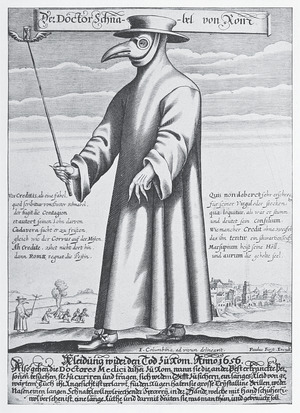
Plague in Tewkesbury
In 2020, the world experienced its first global pandemic since the influenza outbreaks of the 20th century, beginning with the Spanish flu of 1918. The events were not only devastating and terrifying, but also highlighted the fragility of the modern world. Despite all the advances in modern medicine, the experts were left baffled for a time, as they fought to create a cure whilst controlling the spread of the coronavirus known as Covid 19. So, it is hard to imagine the terror that the black death must have caused during the middle-ages and later the plague of the 16th and 17th century when there was virtually no understanding of disease, its cause or cure. Until the discovery of bacteria in the mid-19th century, washing hands and covering one’s face before coughing or sneezing would not have occurred, making the spread of disease an inevitable outcome.

(Spanish flu-1918 vs Covid 2019-2020)
When thinking about the plague, it is easy to imagine the problem in large cities like London, York, and Edinburgh; busy streets with many people confined at close quarters would have provided the perfect breeding ground for plague and other infectious diseases. But it would be inaccurate to presume that it was large cities alone that suffered the consequences of this devastating plague. When it comes to contagious diseases, boundaries and populations are not always a guarantee of safety.
Plague left its mark on the small market town of Tewkesbury in just the same brutal way as it had in the largest Cities of the British Isles.

(Tewkesbury circa 1923 – Credit The Francis Frith Collection)
The first incident of plague recorded in the area, (that I was able to find whilst researching) was in the village of Bredon in 1350, when half of its population perished, including the bishop who commissioned the tithe barn which still stands today, and is worth a visit should you be passing through Bredon.

(Bredon Barn, Worcestershire)
In 1578, when people were preparing for the Michaelmas celebrations, a pestilence broke out in the town killing thirty people over a period of 6 weeks. This must have been quite a shock to the residents of the town as they struggled with the loss of neighbours and friends. Plague returned once again in 1579, however only five people lost their lives, thanks to the quick actions of the two towns bailiffs, who responded by closing the affected houses to halt the progression of the disease, and the outbreak was contained.
Plague orders published in 1578 by the government of Elizabeth I, set out a list of seventeen stipulations for the management of plague across the country. It was at this point that the plague cross began to appear. These crosses which were sometimes painted on doors in red, black or blue, indicated that a household had fallen victim to the deadly disease and was to be avoided. Some crosses were made of wood or written on paper and pinned to the door. Often beside the cross were the words ‘Lord have mercy on us.’
In 1591 the plague that had ravaged London only affected one household in Tewkesbury. Interestingly, this happened once more around the time of Michaelmas. Could it have been as a result of people travelling to the town to visit family for the festivities? Or perhaps the result of infected items being bought at markets wider afield which were then transported to Tewkesbury with its invisible killer tucked between the folds of clothing or in baskets of purchased items.
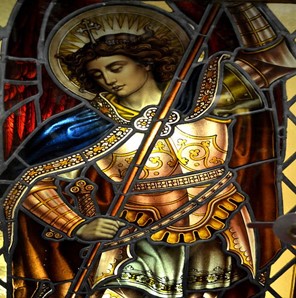
Saint Michael
In November 1592, a devastating recurrence of the disease fell upon Tewkesbury, beginning in Barton Street. Although it only affected 1 or 2 houses at first, by the following April it raged fiercely and continued throughout the summer, winter, and spring until the middle of May 1594 when it simply stopped. Over 150 houses were infected by this devastating plague, resulting in around 560 people losing their lives within the year. By today’s standards in our ever-growing town, 560 people might not seem that bad for such a deadly disease and over the course of 2 years, however, Tewkesbury would have been a much smaller community at the time and as such, the loss of so many lives would have been keenly felt.
In an attempt to slow the spread of the deadly disease, markets were suspended in the town for several months and many people left to avoid the very real risk of death and disease. This must have had a tremendous effect upon the economy of the town as traders lost a vital trading area and locals were denied access to the goods they sold.
It was largely thanks to the kindness of outsiders that the poorer inhabitants of Tewkesbury were able to survive, as they were provided with provisions and money which helped to support them during the terrible crisis. The towns inhabitants were barred from entering any market town and forced to carry certificates which displayed where they had come from and confirmed that they were plague free.
Once more the plague reared its ugly head when in 1598 it swept through the town and took the lives of around forty people.
In 1604, a group of fishermen returning from Bristol, unknowingly brought the plague with them, once more to ravage Tewkesbury.
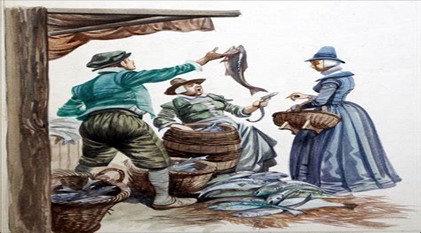
Market
The bodies were buried in coffins made of board. The wider area was often affected by plague as was apparent in 1609 when the villages of Fiddington, Tredington and Southwick were struck during the time of harvest, workers possibly the source of the pestilence as they travelled in their search for seasonal work.
When plague struck once more in 1624, the bailiffs had temporary dwellings built at Oldbury Fields and were able to quarantine the affected whilst protecting the community, at the same time isolating the spread of the disease. Only twenty people died due to the quick thinking of the bailiffs.
This was the last time that the dreaded plague threw its deadly cloak over the streets of Tewkesbury and the town remained unmolested therein. Today Tewkesbury has a cholera pit located in the town cemetery and on Barton Street, a stark reminder of another 19th century deadly disease which attacked England.

(Cholera memorial-Tewkesbury cemetery)
Ref: The History of Tewkesbury by James Bennett Also: Tewkesbury Historical Society
Recent Comments