
Science
School Workshops For all other information about visiting including the all-important prices and timings, please see our Education Home Page.
 Workshops
Animals & adaptations
Science: KS1 Animals; KS2 Animals and Living things & their habitats
Art & Design: KS1 and KS2 Produce creative work, range of materials and observations; KS3 Observation and range of techniques and media
Handle and observe animals from our natural history collection, learn about food chains, predators and prey, night and day, examine their features in detail and create tactile animal portraits
This workshop works especially well alongside ‘Living things & their habitats’
Living things & their habitats
Science: KS1 Animals; KS2 Animals and Living things & their habitats
Identify living things in their natural habitats with a creature crawl and pond-dipping in the Secret Garden, plus a visit to the museum to view the Natural History collection, which includes mammals and birds too shy, too small, too rare to see in the wild!
To get the best out of this workshop, April to October is recommended
This workshop is ideally linked with ‘Animals & Adaptations’
“Really enjoyed the nature hunt outside, as this will have been the first experience of this for a few of our pupils. The animals inside were also brilliant and great for children to see them up close. Kirstie and Martin were very knowledgeable with all of the animals and could answer all of the children’s questions!”
Tudor princes, pests & pennies: Tudor attitudes to wildlife
History: KS1 significant historical events, people and places in their own locality; KS2 study of an aspect or theme in British history beyond 1066; KS3 the development of Church, state and society in Britain 1509 – 1745
Science: KS1 Animals; KS2 Animals and Living things & their habitats
Mathematics: KS1 developing confidence and mental fluency with whole numbers and counting; KS2 solving problems with addition and subtraction using concrete objects and pictorial representations; KS3 add and subtract numbers mentally.
How much did the Tudors pay for a fox’s head and why? What does a mole’s coat feel like? Which animal did they believe turned into a witch? A very engaging, cross-curricular session using the natural history collection to learn about Tudor folklore & attitudes.
This workshop works very well alongside ‘At home with the Tudors’ and ‘Tudor toys & games’
Royal Society of Science Project
The John Moore Museum has been awarded grant funding to put on Natural History workshops with schools by the Royal Society of Science! Would you like to participate in the project? Schools will receive a free school workshop or outreach session, and afterwards have the opportunity to design an exhibition panel that will go on public display.
Please speak to our Heritage Manager, Kirstie, if you are interested. Email: education@johnmooremuseum.org or call 01684 297174 today.

Twyning Primary School, Royal Society of Science Exhibition


Natural History Outreach Workshops
Can’t come to us? Then let us come to you. What better way is there to get pupils engaged in science, that getting up close and personal with animals so elusive, you rarely see them even in the wild?
The John Moore Museum provides full and half day workshops for schools teaching Science: Life processes and living things for key stages 1 and 2. We will bring a variety of animals from our Natural History collection, many of which can be handled. Our outreach visits will focus on:
- Variations and classifications
- Living things in their environment, including habitats and adaptations
We offer handouts on all the animals and are more than happy to adapt our package to suit your requirements.
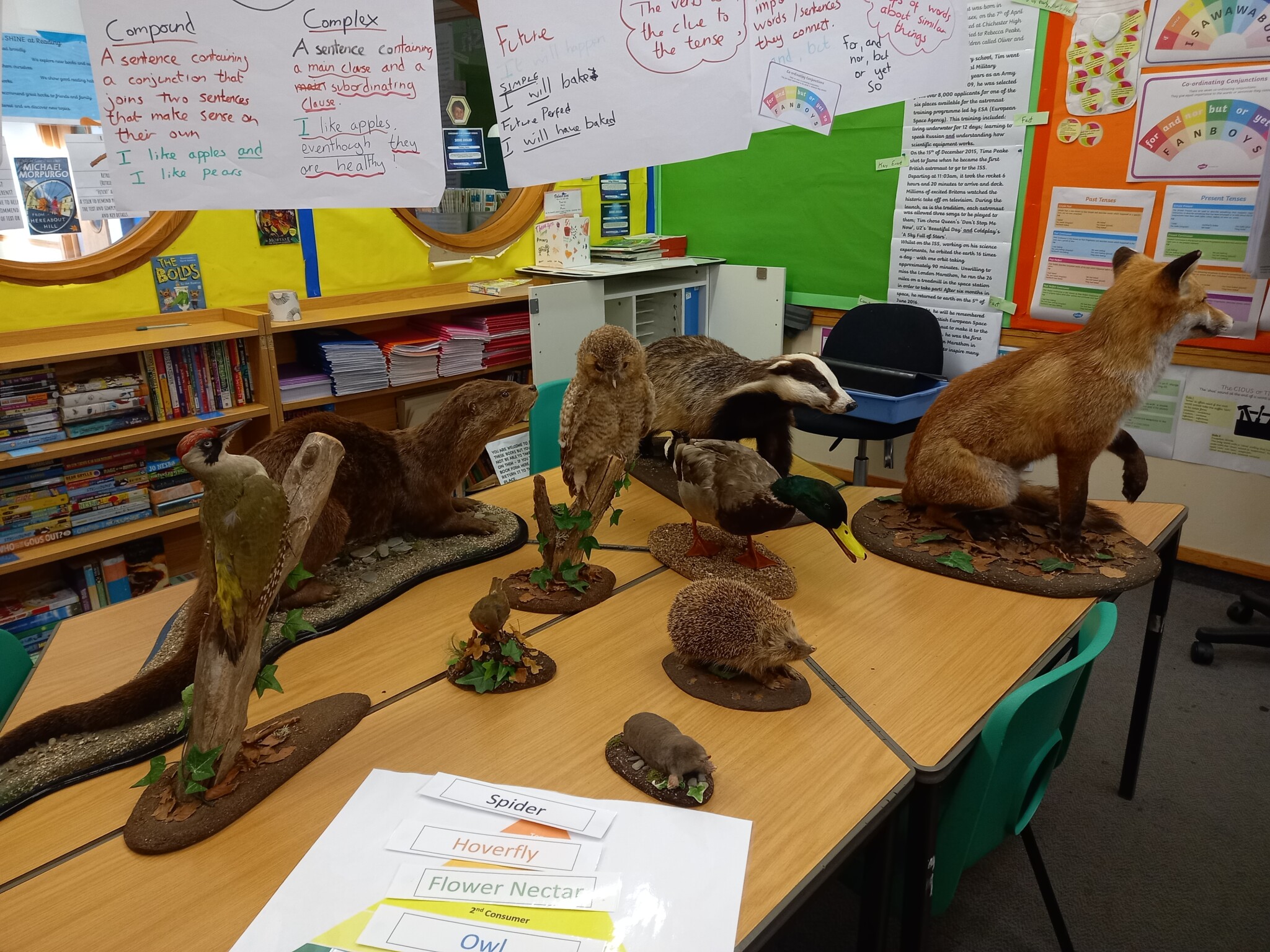
Natural History Outreach at Tewkesbury C of E Primary
Resources include: Otters, Badgers, Foxes, Hedgehogs, Pygmy Shrews, Bats, Moles, Kingfishers, Kestrels, Herons, Woodpeckers, Owls & many other examples of native woodland, wetland, farmland & garden wildlife. We don’t tend to bring all of the above so let us know if there are particular animals you’d like your group to see.
We generally recommend that an outreach session lasts 2 hours with a break in the middle. A 2 hour workshop costs £40, plus travel expenses (45p per mile). Setting up time and breaks are not included in the 2 hours.
Whilst our staff are very experienced at working with children, we ask that teaching staff remain with the group.
For an additional £25, you can borrow the animals for up to two weeks to continue with your class work.
Please note: our Natural History collection species are victims of accident, predators or natural causes. The museum never kills animals for display.