
The Buzzard – (Scientific name-Buteo buteo)
By Museum Assistant Angela Dunsby
The buzzard comes from the family of birds, which includes kites, hawks and eagles. It is the commonest and most widespread bird of prey in the UK, pushing the kestrel into second place. For the first time in 200 years, they now breed in every county in England, Wales and Scotland. Buzzards are recognisable by their broad rounded wings, short neck, and tail. When in-flight the tail is often fanned whilst the wings form a shallow “v” shape. Buzzards vary in colour, from dark to much lighter brown, although all have dark wingtips and a finely barred tail. The beak is black and yellow with a short powerful hook, the perfect weapon for tearing the flesh off prey. The adult bird has a wingspan of 113-128cm, the male can weigh up to 1,000g and a female as much as 1,300g. There are approximately 57,000-79,000 breeding pairs in the UK today.

The distinctive mewing call of a buzzard sounds similar to a cat or kitten crying. It can take juvenile birds several years to master the adult call. The natural habitat of the buzzard is woodland, farmland, grassland, heathland, and upland. This wide range of habitat is testament to this bird’s ability to adapt to a variety of environments. British buzzards are native, but many in the North move to Africa during the winter months.
When building a nest, the buzzard will often decorate it with fresh green foliage. Nests are usually built in trees, although some nest on rocky crags or cliffs. The female lays a clutch of 2-4 white eggs with red and brown markings, at 3-day intervals in mid-April. She does most of the incubation herself, this takes around 33-35 days for each egg. The chicks hatch at 2-day intervals.

Three quarters of buzzards die before they mature at 3 years old, usually due to starvation. If they mature to breeding age, then the life expectancy is around 8 years old, although the oldest wild buzzard recorded was 25 years and 4 months in the UK.
The buzzard diet consists mainly of small mammals, birds, and carrion. They are known to also feed on earthworms and large insects if the regular food supply is in short supply. More unusual sources of food recorded are puffins, frogs, and dung beetles, although carrion and earthworms are still the preferred choice of food. Despite its size, the buzzard is not considered a major predator, preferring a diet of carrion and earthworms.
The buzzard is a majestic sight and commonly seen sharing the skies with red kites. They are often harassed by crows, who seem not to like the presence of buzzards and will often try to steal their food.

Quote
John Moore’s observation on these beautiful birds:
Towards the end of the last war, after more than 50 years’ absence, the buzzards came back to breed in the Cotswolds. They found Gloucestershire more hospitable than it had been when keepers were numerous, landlords less enlightened, and egg-collectors free to do their worst. So they increased fairly quickly, and by 1949 there were at least three pairs and probably five, nesting within an hour’s drive of my house. That spring, a single bird, as if on reconnaissance, visited Bredon Hill, where I live, and delighted me for hours by gliding in wide circles high above my garden. I had watched buzzards often in Wales and Scotland, but it was much more exciting, much more splendid somehow, to be able to look up from one’s digging and see the great hawk tacking like a yachtsman in the turbulent airs and then suddenly soaring without effort as it reached the upward current above the edge of the escarpment.
(The Season of the Year: 1954)
© John Moore Society
Did you know?
The Royal Navy launched HMS Buzzard on 10th May 1887 in Sheerness dockyard, and the emblem for the ship was an open winged buzzard. Although it is unknown why the buzzard was chosen as the symbol for this line of ships.
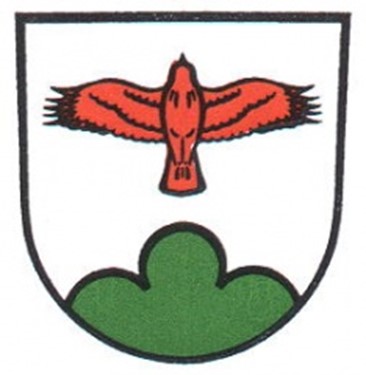
HMS Buzzard Insignia
Recent Comments