
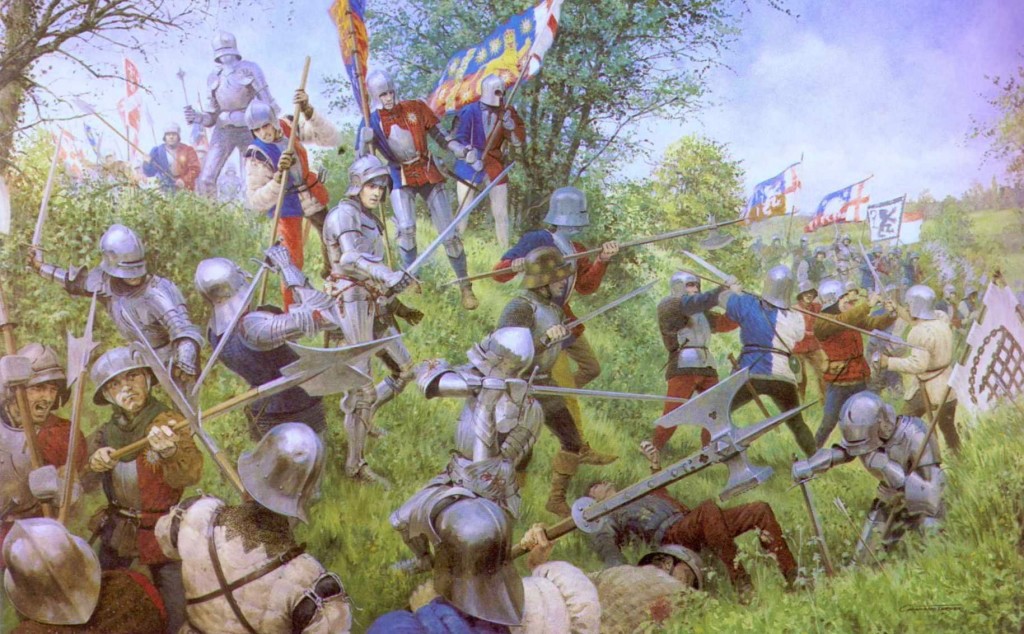
3rd May 1471….the night before
By Lindsay Parrington
As I sit in my back garden, I look over the fence to the Gaston Fields. According to historians, this field is the site on which the Lancastrian army camped the night before the Battle of Tewkesbury.
Now I’m a Lancastrian, born and raised in Rochdale, home of clogs, black pudding, Gracie Fields and the ‘Rochdale cowboy’ (look it up!) I know the Lancastrian forces did not consist of flat-capped men with whippets; they fought for the royal house of Lancaster. Amongst their ranks would have been men from all over England and mercenaries from foreign shores.
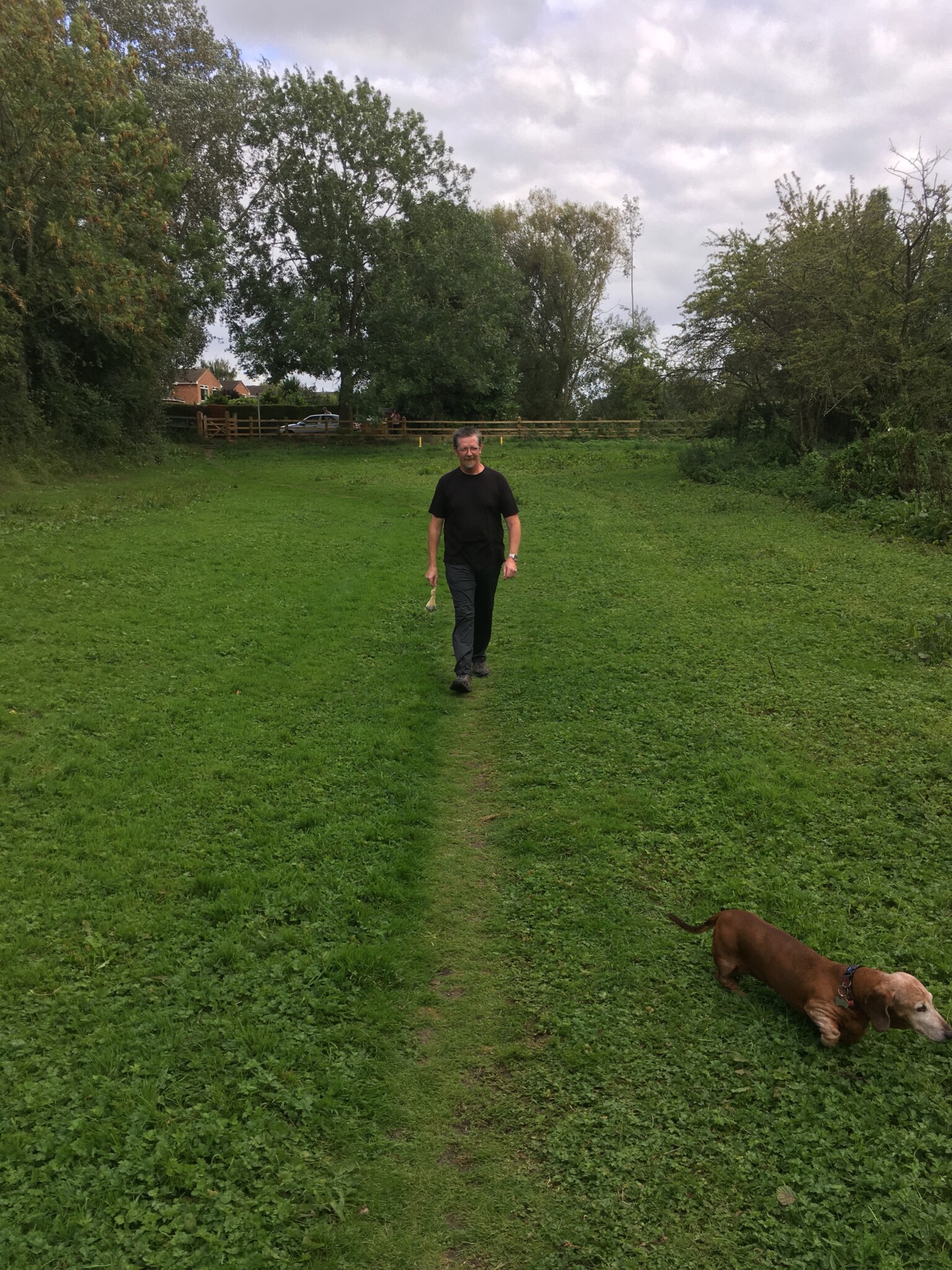
The Bloody Meadow in safer times for us Lancastrians…
It makes me shiver thinking that for many of these men; it was their last night on this earth. Prayers would have been said and many a soldier would have had a restless night, even though they were bone tired. The men would have undoubtedly dreamt of their wives and children back home in the villages that they were born and raised in. For some it may have been the only time they had left their county. Most of these men were not professional soldiers; they were farm labourers, blacksmiths, coopers and ploughmen.
Many soldiers were slaughtered on the day of the battle; some escaped the ‘Bloody Meadow’ and execution. I wonder what became of them. Some will have intended to get back home. Do you think they would have been recognisable as defeated Lancastrians? Could they have wandered into town of Tewkesbury without being captured and killed?

Battle of Tewkesbury Re-enactment
Imagine a defeated soldier; say from the county of Somerset. He desperately wants to make his way home. He walks through the town, fearful of capture, but he needs supplies for his homeward journey. He has a few pennies with which to buy some food and perhaps a better pair of shoes than the ones he has worn out by many days of marching. Perhaps he has something to barter with. Maybe he joined in with the pillaging of the dead. Would he have been thinking they were his comrades, but he is alive and surely to empty the pockets of a dead soldier is not the worst sin a man can commit?
Our battered, defeated and fearful Lancastrian may have stopped off at what is now the John Moore Museum to buy goods for his journey home. The row of cottages on Church Street may have been shops in 1471 selling items he needed to make that long walk to home and safety.
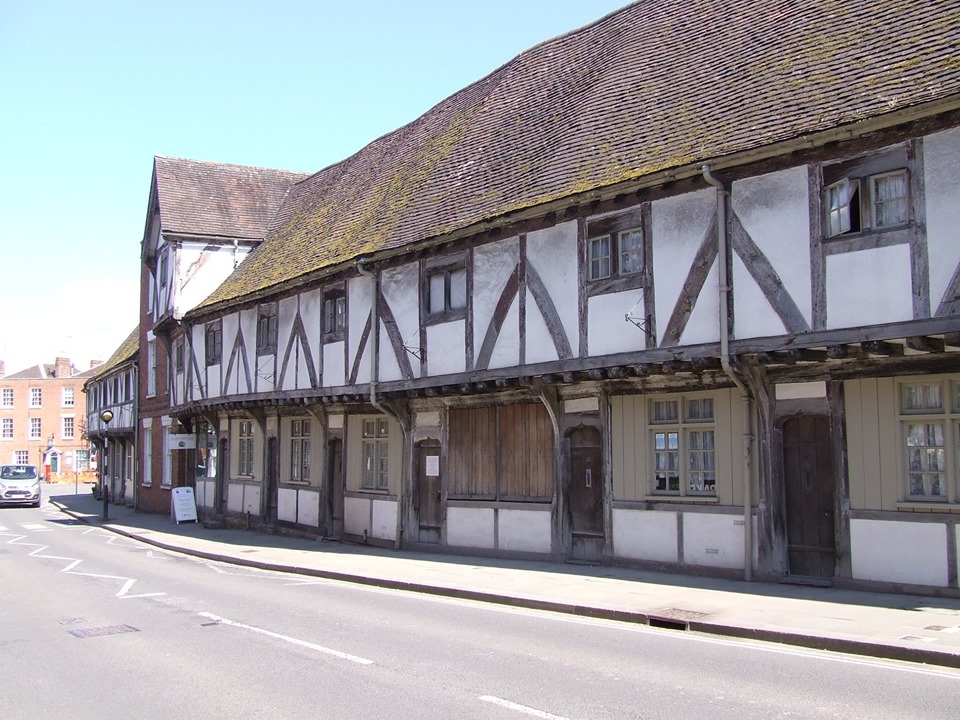
The Abbey Lawn Trust Cottages on Church Street
When are you starting a podcast?
What an evocative tale! I feel the fear and hopefulness of the young Lancastrian soldier on the eve of battle. I hope he makes it, wherever he calls home.